By Analyst Team · Updated 2026-07-13 · 12 min read
If you've ever caught yourself frustrated with a cable bill that keeps climbing or a streaming service that never has the live channel you want, you've likely started searching for an ip-tv provider. That search is exactly why this guide exists. We're going to give you the straight facts — no fluff, no hype — so you can understand exactly what an IPTV service is, how it works, whether it's right for you, and how to pick a provider that won't let you down.
The image above shows a typical modern setup where an IPTV service replaces traditional cable. The core promise is simple: thousands of live channels, movies, and TV series delivered over your internet connection, often for less than half the cost of cable. But as with any technology, the devil is in the details. Let's break down everything you need to know.
LIMITED TIME AVAILABILITY
Unlock Full ip-tv provider Access
Secure special promotional rates instantly before the window closes. Lock in your pricing model today before plans return to standard regional metrics.
What Is an IP-TV Provider Exactly?
An ip-tv provider is a company that delivers television content over the internet protocol (IP) network — in other words, through your broadband connection — rather than through traditional terrestrial, satellite, or cable television formats. The term "IPTV" stands for Internet Protocol Television. Unlike streaming services like Netflix that only offer on-demand content, most IPTV providers offer both live TV channels and an on-demand library of movies and series.
Think of it this way: cable TV sends a constant signal to your home, and your set-top box tunes in to the channel you want. IPTV, by contrast, only sends the channel you select — it's an on-demand delivery method for live TV. This makes it far more efficient and allows for interactive features like pause, rewind, and an electronic program guide (EPG) that works across all your devices.
Related entities you'll often hear include: M3U playlist (the file format providers use to list their channels), Xstream Code (a popular software panel for managing IPTV resellers), IPVanish or VPN (privacy tools many users pair with IPTV), and Smart IPTV app (one of the most common players for Samsung and LG TVs). Understanding these components helps you navigate the ecosystem like a pro.
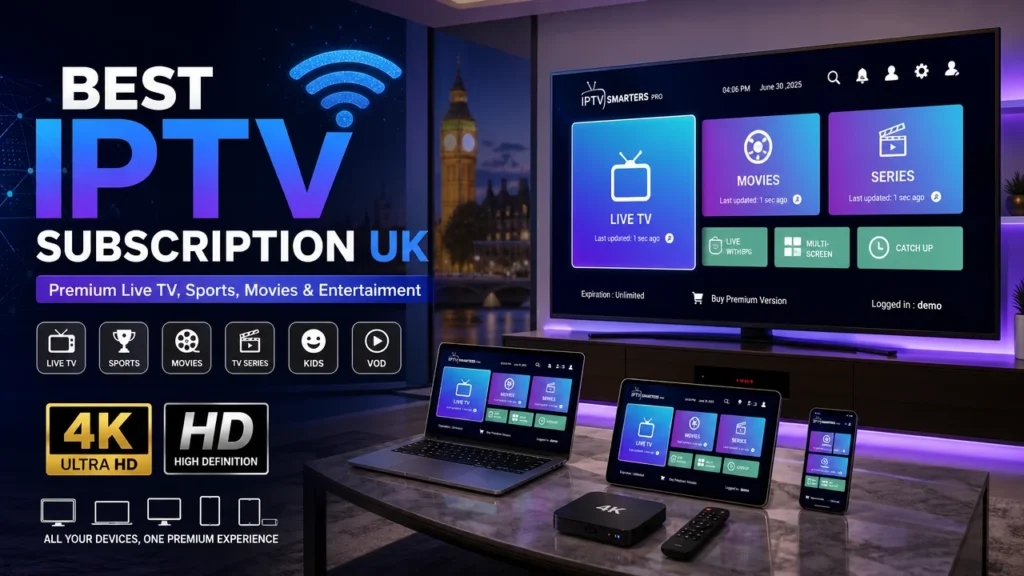
How IPTV Works: A Simple Step-by-Step Breakdown
You might be wondering what actually happens when you open your IPTV app and click on a channel. Here's the technical flow explained in plain English:
Step 1: You subscribe to an ip-tv provider and receive an M3U URL or a username/password. This is essentially your digital key to the content library.
Step 2: You enter this information into an IPTV player app on your device — this could be TiviMate, IPTV Smarters, or a built-in player on your smart TV or Android box.
Step 3: The app connects to the provider's server, authenticates your subscription, and downloads the electronic program guide (EPG) and channel list.
Step 4: When you select a channel, the provider's server streams that specific video file directly to your device using the Real-Time Streaming Protocol (RTSP) or HTTP Live Streaming (HLS). This is why you need a stable internet connection — ideally at least 25 Mbps for HD content and 50 Mbps for 4K.
Step 5: The video appears on your screen with a typical delay of 10-30 seconds compared to live broadcast (this is standard for IPTV due to the buffering and transcoding process).
This system is fundamentally different from the "download-and-watch" model of Netflix or the always-on signal of cable. It's what gives IPTV its flexibility — watch on your phone, laptop, TV, or tablet simultaneously — but also places a premium on your internet quality.
Concrete Benefits of Using an IP-TV Provider
Why are millions of households worldwide switching to an ip-tv provider? The reasons go well beyond just cutting the cord. Here are the tangible advantages you can expect:
Vast Channel Selection: Where cable typically offers 200-300 channels, a premium IPTV provider can give you access to 10,000+ channels from every country imaginable. You get local news, international sports packages, and niche content all in one subscription.
Cost Efficiency: The cheapest ip-tv subscription often starts at just $10-$15 per month for thousands of channels, while the average cable bill in North America now exceeds $100 per month. The savings are dramatic — often 70-80% less.
Multi-Device Flexibility: Watch on your smart TV, Android box, Fire Stick, PC, tablet, or smartphone — sometimes simultaneously. No extra box rental fees for each room.
On-Demand Libraries: Most providers bundle massive VOD (Video on Demand) sections with the latest movies (often in 4K HDR) and full TV series seasons, effectively replacing Netflix for many users.
Catch-Up and Time-Shift: Missed your favorite show? Many providers offer 7-day catch-up TV, letting you watch past broadcasts as if they were on-demand. The electronic program guide also lets you schedule recordings on cloud-based DVR systems.
Honest Limitations You Need to Know
No technology is perfect, and IPTV is no exception. Being transparent about the downsides helps you make a smarter decision. Here are the most significant challenges:
Internet Dependency: If your internet goes down, so does your TV. A reliable ip-tv provider no buffering is only as good as your broadband. You need at least 25 Mbps for smooth HD streaming, and during peak hours, even the best provider can buffer if your ISP throttles video traffic.
Legality Gray Area: While IPTV technology itself is legal, many providers stream content without proper licensing. If you're asking "where to buy IPTV legally," the answer is that only a small number of providers operate with full broadcasting rights. Most operate in a legal gray zone, meaning the service could disappear overnight.
Technical Setup: IPTV isn't plug-and-play like cable. You'll need to configure apps, update playlists, and sometimes use a VPN. For non-tech-savvy users, this can be a barrier.
Reliability Variability: The IPTV market is unregulated. A provider that works flawlessly today might degrade in quality tomorrow or close down entirely. This is why checking ip-tv provider reviews reddit and other community forums before purchasing is critical.
IPTV Service vs. Cable TV: A Real Comparison
To help you see the differences clearly, here's a side-by-side comparison between an iptv service vs cable tv across the factors that actually matter to viewers:
Who Is an IP-TV Provider Ideal For?
Not everyone is a perfect candidate for IPTV. Understanding user profiles helps you decide if this fits your lifestyle:
The Cord-Cutter: You're tired of paying $150+/month for 100 channels you never watch. You want massive choice, international content, and on-demand movies for a fraction of the price. IPTV is a dream come true.
The Sports Fanatic: You follow multiple leagues — NFL, NBA, Premier League, Champions League, UFC. Finding an ip-tv provider for sports gives you every game from every league in one place, often with multiple broadcast feeds (Sky Sports, ESPN, beIN Sports, DAZN).
The Expat or International Viewer: You live abroad but want access to local news, sports, and entertainment from your home country. IPTV delivers thousands of channels from India, the Middle East, Latin America, Europe, and Asia.
The Tech Enthusiast: You enjoy tinkering with Android boxes, Fire sticks, and VPNs. You're comfortable troubleshooting and optimizing your setup for the best experience.
The Budget-Conscious Household: With family-friendly plans often under $20/month, IPTV can replace both cable and a couple of streaming subscriptions. However, if you want zero setup hassle and guaranteed reliability, you might prefer a legal streaming bundle like YouTube TV or Hulu + Live TV.
How to Get Started with an IP-TV Provider: 7 Practical Steps
Ready to try IPTV? Follow this exact sequence to avoid scams, buffering issues, and wasted money:
Step 1: Check Your Internet Speed. Run a speed test. You need at least 25 Mbps download speed for reliable HD streaming. If you want 4K, aim for 50 Mbps+. If your speed is lower, IPTV will likely buffer constantly.
Step 2: Choose Your Device. IPTV works best on Android TV boxes (Nvidia Shield, Mi Box), Amazon Fire Stick, or smart TVs with the Tizen or webOS operating system. Avoid using an old, weak device — it will struggle.
Step 3: Research Providers Thoroughly. Search for "ip-tv provider reviews reddit" and similar community forums. Look for providers that offer free trials (24-48 hours minimum). Avoid anyone who demands payment before a trial. A reputable provider will let you test their service first.
Step 4: Install an IPTV Player App. For Android, TiviMate is the gold standard. For iOS, use IPTV Smarters or GSE Smart IPTV. For smart TVs, find the native "Smart IPTV" app in your app store.
Step 5: Set Up a VPN (Strongly Recommended). A VPN encrypts your traffic and prevents your ISP from throttling video streams. It also adds a layer of privacy. Choose a reputable paid VPN like NordVPN or Surfshark — free VPNs often have slow speeds.
Step 6: Use the Free Trial. During the trial, test: channel loading speed (should be 2-5 seconds), buffering during live sports, EPG accuracy, and resolution quality. Stream for at least 2-3 hours during peak evening time.
Step 7: Subscribe for the Shortest Plan First. Don't commit to a full year immediately. Start with a 1-month plan. If the best ip-tv provider 2026 for you maintains quality for 30 days, then consider a 3-month or 6-month plan.
Unlock complete high-definition information and priority access packs. Get your ip-tv provider subscription today with premium support and zero buffering during major live events.
Claim This Special Offer for ip-tv provider →Frequently Asked Questions
1. How to choose an IPTV provider that won't buffer?
Look for providers that explicitly advertise "anti-buffer technology" and dedicated streaming servers. Check Reddit and Trustpilot for real user reports during peak hours (evenings and live sports events). Always take a free trial and test during those peak periods. A reliable ip-tv provider no buffering will have redundant server networks and adaptive bitrate streaming. Also, ensure your internet speed is sufficient — upgrading your plan or switching to a wired Ethernet connection often resolves buffering issues more than changing providers.
2. What's the cheapest IPTV subscription that's actually reliable?
The cheapest ip-tv subscription that still delivers consistent quality typically ranges from $10 to $15 per month. Avoid anything under $8 per month — these are often oversold services with massive buffering issues. Many providers offer discounts for 6-month or annual plans, bringing the cost down to $7-$9 monthly. However, we recommend starting with a monthly plan to test reliability before committing long-term. Some budget-friendly providers also limit simultaneous connections, so check for that if you have multiple TVs.
3. Where to buy IPTV legally vs. illegally — how to tell the difference?
If you're asking "where to buy IPTV legally," start with licensed services like Verizon Fios, AT&T TV, or local telecom IPTV offerings. For the $10-$20 range most people search for, the legal landscape is complex. Legitimate providers hold broadcasting rights for their content and operate with transparent business registrations. Red flags include: requiring cryptocurrency-only payments, having no clear company address, promising every channel in the world, and using vague terms like "IPTV subscription only." Legal providers typically specialize in specific regions or content packages.