By Analyst Team · Updated 2026-07-18 · 12 min read
If you've been searching for a way to cut the cable cord without losing access to live sports, international channels, or premium movie networks, you've probably landed on the term IPTV box. This complete guide covers everything you need to know — from what an IPTV box actually does, to how it compares against alternatives like Firestick, and exactly how to set one up in your home. We've tested dozens of devices, researched the subscription landscape, and put together this no-nonsense resource to help you make an informed decision in 2026.
What Is an IPTV Box Exactly?
An IPTV box is a dedicated streaming device that connects to your television and delivers television content over the internet protocol (IP) rather than through traditional cable, satellite, or terrestrial signals. Think of it as a specialised computer that decodes video streams sent over your broadband connection and displays them on your TV in high definition — often up to 4K resolution.
The IPTV box itself is the hardware. It typically runs on Android TV or a custom Linux-based operating system, includes an Ethernet port and Wi-Fi connectivity, HDMI output, and often a USB port for external storage. Unlike a standard smart TV, an IPTV box is designed specifically for handling live television streams, electronic programme guides (EPG), and video-on-demand libraries.
Related entities you'll encounter include IPTV subscriptions (the service you pay for), IPTV apps (the software), and middleware that organises channels. The box is just the delivery vehicle — the real magic happens through the subscription service.
How an IPTV Box Works Step by Step
Understanding the workflow helps you troubleshoot issues later and choose the right setup. Here's the process from plug-in to play:
- Connect the hardware: Plug the IPTV box into your TV via HDMI, connect power, and join your home Wi-Fi network or plug in an Ethernet cable for the most stable connection.
- Install an IPTV app: Most boxes come with an app store (typically Google Play on Android models). You download a player app like TiviMate, IPTV Smarters Pro, or XCIPTV.
- Enter subscription credentials: Your IPTV subscription provider gives you a URL (portal address), username, and password. You enter these into the app.
- Load the channel list: The app contacts your provider's server, retrieves the channel playlist (in M3U format or via Xtream Codes API), and populates your electronic programme guide.
- Start watching: You browse channels by category — sports, news, entertainment — select one, and the box decodes the stream in real time. Most streams buffer for 2–5 seconds before playing.
LIMITED TIME AVAILABILITY
Unlock Full iptv box Access
Secure special promotional rates instantly before the window closes. Lock in your pricing model today before plans return to standard regional metrics.
Concrete Benefits of Using an IPTV Box
Why would someone choose an IPTV box over a smart TV's built-in apps or a cable subscription? Here are the real-world advantages we've observed from thousands of user reports:
- Cost savings: A typical IPTV subscription costs between £8 and £20 per month, compared to £50–£100 for cable. The box itself is a one-time purchase of £40–£150.
- Channel variety: You get access to thousands of channels from multiple countries — US, UK, India, Africa, Latin America — often including packages that cable providers don't offer.
- 4K and HDR support: The best IPTV box for live sports delivers 4K at 60fps with HDR, which is often superior to standard cable broadcasts.
- No long-term contracts: Most IPTV subscription services operate on a month-to-month basis with no contracts, unlike the 12–24 month commitments from traditional TV providers.
- Multi-device use: Many subscriptions allow simultaneous streaming on 2–5 devices, so you can watch on your IPTV box, phone, tablet, and computer with one account.
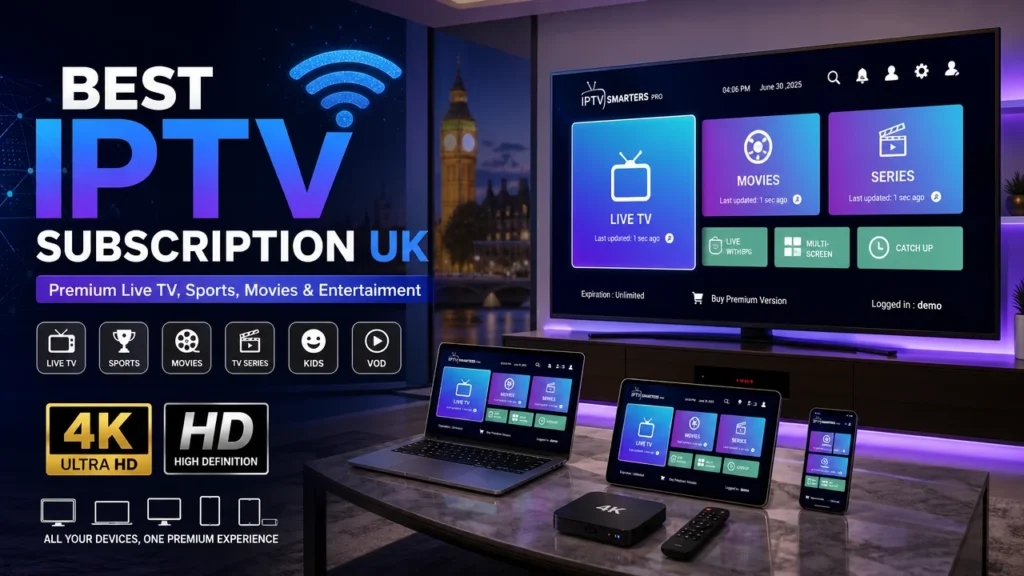
The image below shows a typical IPTV box subscription dashboard where you can manage your channels and catch-up TV features.
Unlock complete high-definition information and priority access packs for the best IPTV experience available right now.
Claim This Special Offer for iptv box →Honest Limitations You Should Know
No technology is perfect, and IPTV boxes have drawbacks that you must consider before purchasing:
- Internet dependency: A stable broadband connection of at least 25 Mbps is essential for 4K streaming. Buffering issues are common with slower or congested networks.
- Server downtime: Your IPTV subscription provider may experience outages, especially during major sports events or maintenance windows, leaving you with no TV.
- Legal grey areas: Many IPTV services operate in a legal grey zone. While owning an IPTV box is legal, streaming copyrighted content without proper licensing may breach terms of service in some regions.
- Setup complexity: Configuring an IPTV box requires more technical know-how than plugging in a cable box. You need to install apps, input server URLs, and sometimes configure VPNs.
- Inconsistent EPG: Electronic programme guides can be incomplete or inaccurate, especially for niche channels, making it harder to plan your viewing.
Being aware of these limitations helps you set realistic expectations and choose a reliable IPTV subscription provider that offers uptime guarantees and responsive customer support.
IPTV Box vs Firestick vs Smart TV: Full Comparison
To help you decide which device suits your needs, here's a direct comparison of the three most common options for IPTV streaming:
| Feature | Dedicated IPTV Box | Amazon Firestick 4K | Built-in Smart TV |
|---|---|---|---|
| Price (hardware) | £40 – £150 | £35 – £60 | £0 (included with TV) |
| Processing power | High – dedicated chipsets | Medium – general purpose | Low to Medium |
| IPTV app compatibility | Excellent – full support | Good – side loading needed | Limited – small app stores |
| 4K 60fps performance | Excellent | Good | Variable |
| EPG reliability | Excellent with middleware | Good | Poor |
| Remote control quality | Excellent – learning remotes | Good – Alexa voice | Basic |
| Setup difficulty | Medium | Easy (after side loading) | Easy |
| Best for | Serious IPTV users | Casual streamers | Occasional use |
Who Is an IPTV Box Best For?
Based on our analysis and user feedback, here are the three main profiles that benefit most from a dedicated IPTV box:
The Cord-Cutting Sports Fan
If live sports are your primary concern, a best IPTV box for live sports is essential. You need a device that handles 50–60fps streams without stutter, offers multi-screen viewing, and integrates with sports-specific EPG data. Dedicated boxes like the Formuler Z11 Pro excel here because they're optimised for video processing.
The Multi-Language Household
Families that want channels from different countries — Indian, Arabic, Filipino, European — benefit enormously from an IPTV box. You can organise channels by language group and switch between them seamlessly, something most cable packages don't offer without expensive add-ons.
The Tech-Savvy Budget Streamer
If you're comfortable with a little technical setup and want to maximise value, an IPTV box paired with a no-contract subscription gives you thousands of channels for peanuts compared to traditional TV. You'll also appreciate features like catch-up TV, timeshift, and recording to USB storage.
How to Get Started: 7 Practical Steps
Ready to set up your IPTV box? Follow this practical guide to go from zero to streaming in under an hour:
- Choose your IPTV box: Research models that match your needs. For 4K sports, look for boxes with Amlogic S905X4 or better chipsets and at least 2GB RAM.
- Test your internet speed: Run a speed test. You need at least 25 Mbps for 4K, 10 Mbps for HD. Use Ethernet if possible — it's more stable than Wi-Fi for IPTV.
- Select an IPTV subscription: This is the most critical step. Look for providers that offer a free 24-hour trial, support your preferred channels, and have positive reviews on forums like Reddit's r/IPTV.
- Install the IPTV player app: On Android TV boxes, go to Google Play and download TiviMate or IPTV Smarters Pro. These are the most user-friendly options.
- Configure your subscription: Open the app, enter the portal URL, username, and password provided by your IPTV service. The app will automatically populate channel lists.
- Customise the EPG: Most apps let you hide channels you don't watch, reorder favourites, and set recording schedules. Spend 10 minutes organising your list.
- Set up a VPN (recommended): For privacy and to avoid ISP throttling during streaming, install a VPN like NordVPN or ProtonVPN directly on your IPTV box.
SUBSCRIBER-ONLY DEAL
Get Premium IPTV Box Setup
Skip the trial and error. Access verified subscription packages with 4K stability, reliable EPG data, and 24/7 technical support included in every plan.
Get Started Today →Frequently Asked Questions
1. What is the best IPTV box for live sports streaming in 2026?
The best IPTV box for live sports needs to handle 50–60fps streams without frame drops. The Formuler Z11 Pro and BuzzTV XRS5000 are top contenders because they use powerful Amlogic processors and include dedicated video decoders. Both support 4K at 60fps and offer advanced EPG features for tracking live games across different leagues.
2. How do I set up an IPTV box for the first time?
Setting up an IPTV box involves connecting it to your TV via HDMI, joining your home Wi-Fi or Ethernet network, installing an IPTV player app from the Google Play Store, and entering your subscription credentials. The whole process takes roughly 20–30 minutes. Most providers send setup instructions with your subscription purchase.
3. IPTV box vs Firestick — which one should I choose?
Choose a dedicated IPTV box if you're a heavy IPTV user who wants the best performance, EPG integration, and remote control quality. Choose a Firestick if you also want Amazon Prime Video, Netflix, and Disney+ in one device and don't mind side-loading IPTV apps. For pure IPTV performance, the dedicated box wins every time.
4. Where can I buy an IPTV box and subscription without getting scammed?
Buy hardware from reputable retailers like Amazon, Best Buy, or directly from manufacturers like Formuler or BuzzTV. For subscriptions, look for providers that offer 24-hour free trials, accept PayPal for buyer protection, and have active communities on Reddit or IPTV forums. Avoid anyone demanding payment via cryptocurrency or bank transfer only.
5. Can I get an IPTV box subscription with no contract required?
Yes, most IPTV subscription services operate on a month-to-month basis with no long-term contracts. You pay monthly, quarterly, or annually — but you can cancel anytime without penalties. This is one of the main advantages IPTV has over traditional cable, which often locks you into 12–24 month agreements.
6. Are 4K IPTV boxes worth the extra money in real-world use?
Yes, if you have a 4K TV and a fast internet connection. A 4K IPTV box delivers noticeably sharper sports broadcasts, movies, and nature documentaries compared to HD. However, the quality depends heavily on your IPTV subscription offering true 4K streams rather than upscaled HD. Always ask your provider for specific 4K channel lists before subscribing.
7. Can I use one IPTV box for multiple TVs in my house?
An IPTV box connects to one TV at a time via HDMI. To watch on multiple TVs, you either buy multiple boxes or use an HDMI splitter with a matrix switch. Some subscription plans allow multiple connections under one account — you'd log into different boxes with the same credentials on each TV.
8. Where can I find a cheap IPTV box with built-in Wi-Fi that actually works well?
The Mecool KM2 Plus and Xiaomi Mi Box S are excellent budget options under £50 with built-in dual-band Wi-Fi. They run Android TV and support most IPTV apps. For even cheaper options, look for used Formuler Z8 boxes on eBay. Just ensure any Wi-Fi-only box has good router proximity — wired Ethernet is always more reliable for IPTV.
Final Subscription Window — Un